
Transitioning BWL's 100 Year Old Steam System to Hot Water
Posted
The Lansing Board of Water & Light began with roots back to 1885 when the need for reliable water service was evident for the newly established state capitol, Lansing. We later added electricity in 1892 and steam heat in 1919. BWL maintains approximately 10.4 miles of underground steam piping serving nearly 138 residential, business and industrial steam customers from the REO Cogeneration Plant. Steam acts as more than just a heat source, it’s also used for humidity control, cooling, domestic hot water, de-icing and industrial and commercial processing.
Being over 100 years old, our steam system has reached the end of its life. Just like anything that’s progressed over 100 years, there are more modern ways to serve our downtown customers which is why we’re transitioning to a new hot water system. Hot water systems are more efficient and environmentally conscious, as they use a closed loop system that requires less gas to heat, saving energy, water and costs for our customers. Hot water is used year-round even in the summer as the system is also used for domestic use at the tap for showers, faucets and appliances.
Planning for the transition from steam to hot water began in 2024 and will be phased over the next 15 years. The conversion will cost approximately $120 million and was partially supported by a grant from the State of Michigan. Each phase of the conversion is projected to save water and energy while reducing our hot water customers’ energy consumption. The new infrastructure resets and extends system longevity by 50 years, lowers maintenance costs and improves pedestrian safety by eliminating steam vent stacks from Lansing streets.
During the planning and initial design phase, Deep Green, the UK-based heat reuse data center developer, proposed a project in Lansing that would supply its waste heat back to the BWL from their site. This would result in an approximate $1.1 million in annual natural gas savings passed directly back to BWL hot water customers through reduced demand, meaning significant savings on hot water bills. Deep Green’s connection into BWL’s hot water system would also mean eliminating at least one heating facility, likely located in Wentworth Park, resulting in an even further savings.
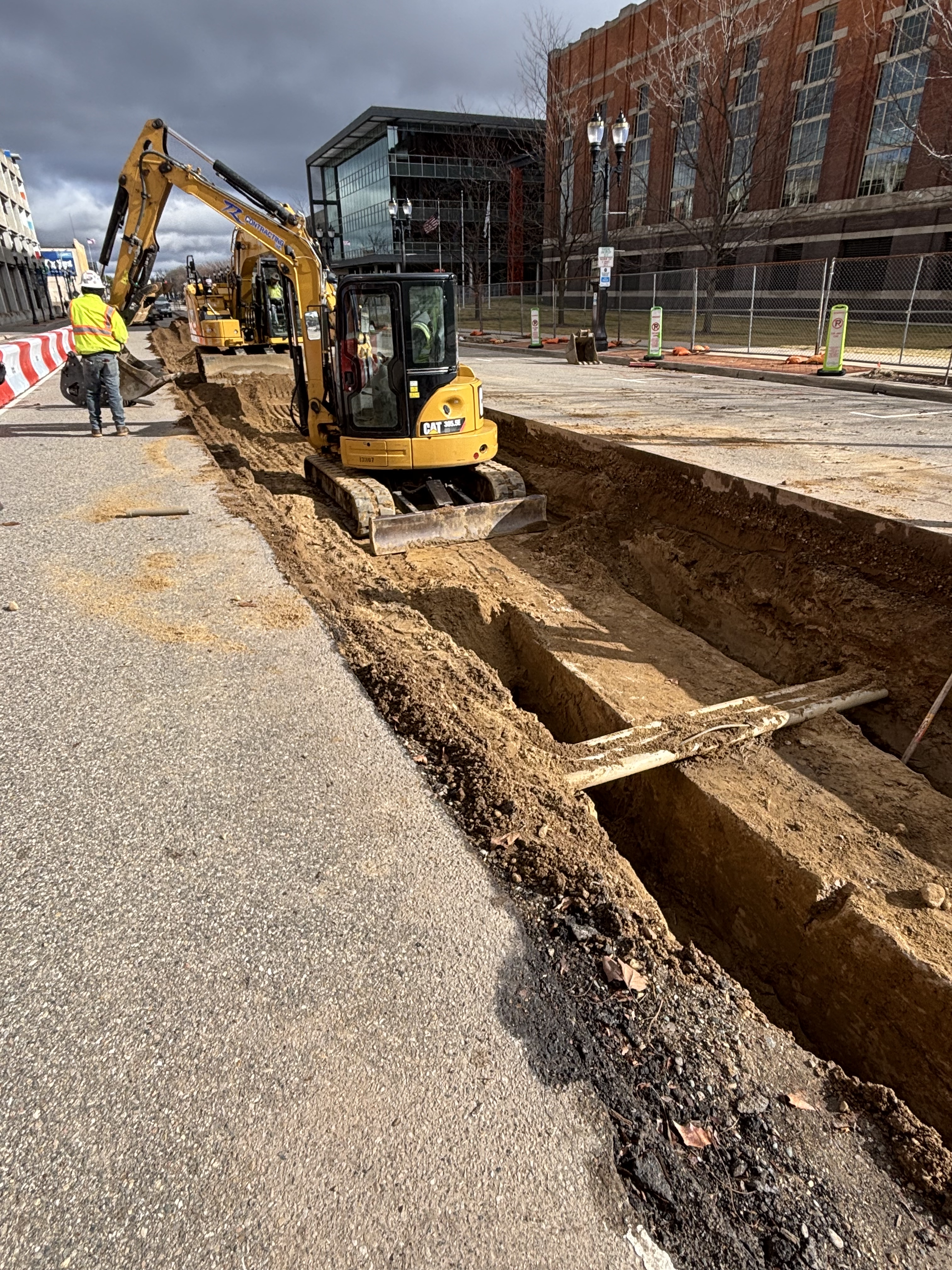
After years of planning and logistics, the BWL finally broke ground on Thursday, March 12, by saw cutting the asphalt to get to our first section of steam main on Grand Ave. Over the course of the past few weeks, the old steam main was removed, and the site is undergoing preparation for the new hot water main to be installed.
BWL’s mission sums this project up well: to provide a safe, reliable and affordable utility experience through public ownership, climate consciousness and innovative strategies. The transition from steam to hot water represents a needed investment in modern, more efficient infrastructure that will support the downtown Lansing community for years to come.