
The Lansing Board of Water & Light’s 2026 Integrated Resource Plan (IRP) is a 20-year roadmap for meeting customers’ energy needs today and into the future while complying with Michigan’s clean energy legislation. An IRP is a long-term strategy that evaluates how a utility can reliably and cost-effectively meet future energy demand while balance economic, environmental and regulatory objectives.
In BWL's 2026 plan, it identifies pursuing nearly 1,400MW of renewable energy over the next 20 years to help us achieve our goal to use 100% clean energy by 2040. Our customers clearly outlined three main priorities - affordability, reliability and clean energy.
Michigan's Public Act 235
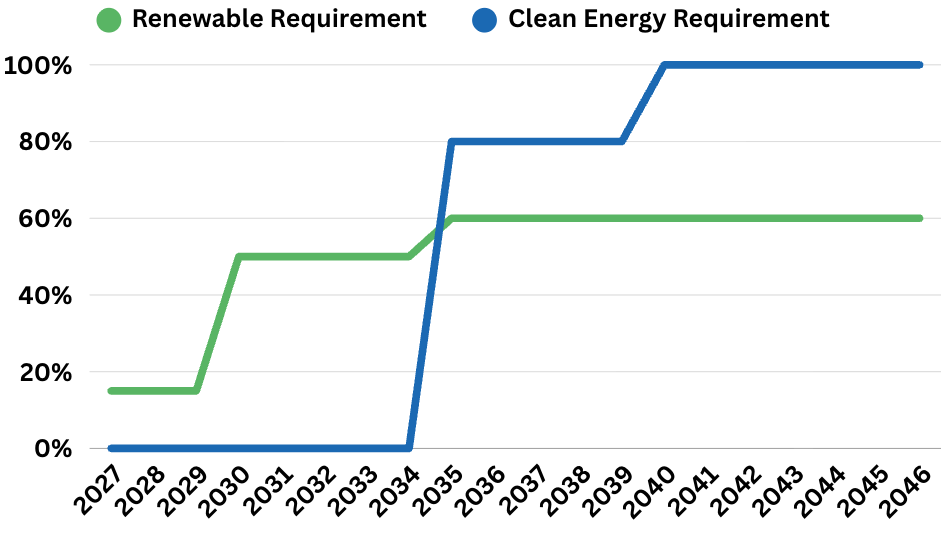
Michigan’s PA 235 of 2023 establishes the state’s clean energy standard, which requires all electric providers to increase renewable energy generation to 50% by 2030 and 60% by 2035. The law also requires utilities to reach 80% clean energy by 2035 and 100% by 2040.
Resource Options & BWL's Current Mix
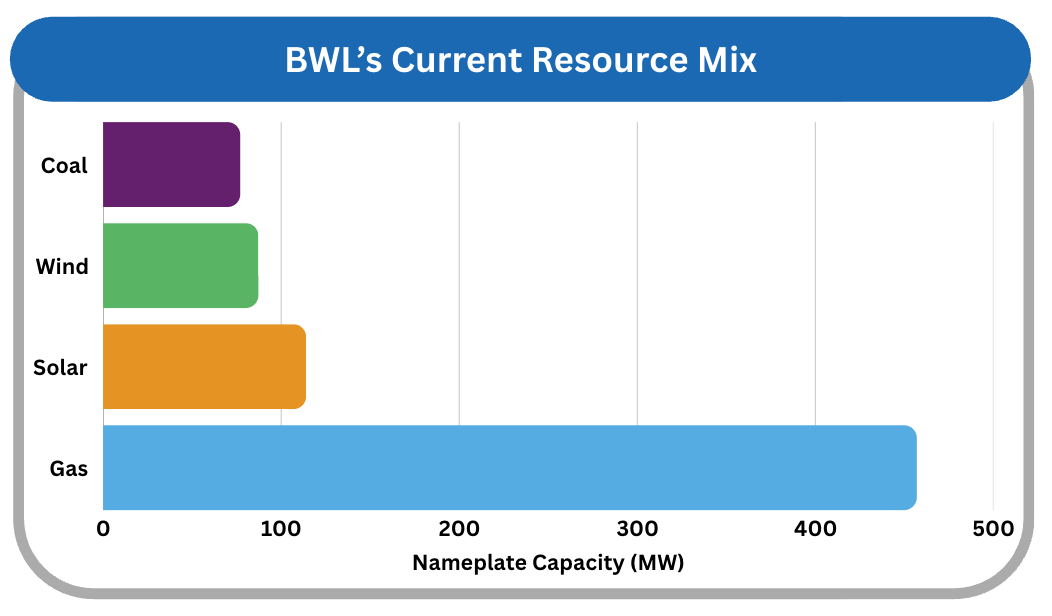
There are three types of options when considering energy generation: renewables - such as solar or wind, clean - which includes nuclear or carbon capture and sequestration, and conventional - like natural gas and battery storage. See BWL's diverse energy portfolio below as we continue to look forward.
IRP Results
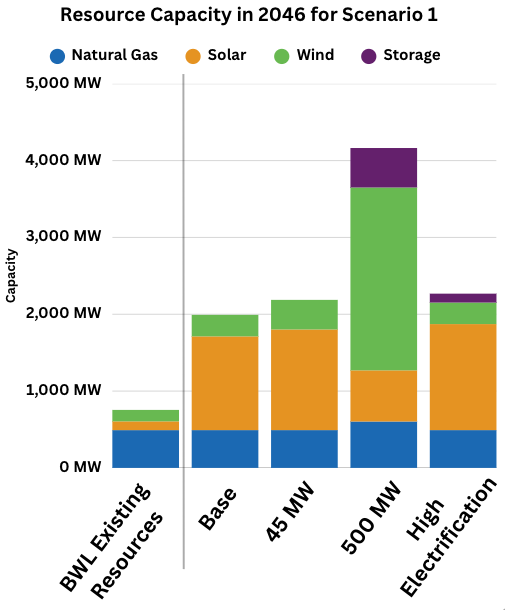
Modeling shows that adding 1,400 MW renewable resources over the next 20 years is the most cost-effective way to meet projected customer demand and legislative requirements, as well as to replace retiring thermal generation and expiring power purchase agreements.
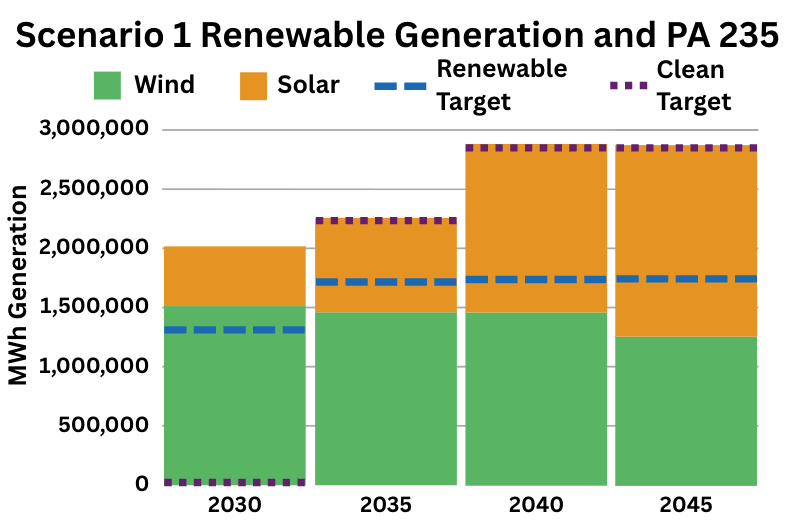
The model recommended that the near-term action plan prioritize adding approximately 280 MW of new wind generation through PPAs. Wind energy is a mature, cost-effective renewable energy technology currently available to support compliance with PA 235 and help diversify BWL’s resource portfolio. The projected buildout enables BWL to achieve affordability objectives in the Strategic Plan while pursuing regulatory requirements, even if interconnection or permitting delays push the wind facility’s energization beyond the short-term horizon.
Short Term Action Plan
- Procure the equivalent of the resources (280MW of wind generation) identified by the IRP, accomplished by launching an all-source RFP in 2027.
- Pursue a three to five-year cycle for BWL’s next IRP. This will allow BWL to more thoroughly gauge both public policy changes and pricing changes within the clean energy sector.
- Continue with local solar development. Deploying solar on BWL’s local transmission and distribution systems allows BWL to increase reliability with local generation and lower cost by reducing market purchases of energy, while serving customers with 100% renewable energy.
- Continue to study and monitor. The evolution of qualifying technologies (Nuclear, Carbon Capture, Battery and new technology).
Three to Five-Year Cycle
Performing an RFP immediately following an IRP allows for validation and review of results from the IRP, and provides real data for the assumptions in the next IRP. IRPs typically take approximately six months to one year to complete, followed by the RFP, which can take one to two years, which creates the roadmap for the next 20 years.
As a key part of the IRP, BWL solicited public feedback in person at five different open houses throughout the service territory, and via an online survey sent to customers. Public meetings and customer feedback was promoted on the BWL's social media pages and advertised with the local media.
See more information from these meetings below.
July 24, 2025 Community Meeting
July 28, 2025 Community Meeting
August 4, 2025 Community Meeting
August 4, 2025 Community Meeting
August 5, 2025 Community Meeting
September 1, 2026 IRP COW Presentation to BWL Board of Commissioners
The Lansing Board of Water & Light's 2020 Integrated Resource Plan (IRP) is a long-term, 20-year plan that provides guidance on how best to meet its customers' future electric energy needs.
This 2020 IRP incorporates key components of the BWL's mission in the development of plan goals and metrics and is the latest planning initiative that has included the 2008 and 2016 IRP’s and the 2016 Strategic Plan, which have resulted in retirement of BWL coal units while adopting a diverse set of generating options. It also sets the stage for the next step in environmental stewardship by embracing the challenge of climate change with a recommendation to pursue carbon neutrality by 2040.
Presentations to the BWL Board of Commissioners (COW)
BWL IRP Powerpoint 2020 - June 30 COW
BWL Planning 2019 - May 14 COW
BWL Planning 2019 - July 16, 2019 COW
BWL Future Considerations to Strategize - September 9, 2019 COW
Clean Energy Journey - November 2019 COW
Stakeholder & Public Meetings
Public meetings and customer feedback was promoted on the BWL's social media pages and advertised with the local media. See more information from these meetings below.
IRP Commissioner Stakeholder PP
Social Media Post - Request for Feedback
Social Media Post - Public Event Invite
RELEASE - BWL to host Open Houses this week to collect input on region’s energy future
Public Open House - Boards Slides
GDS Report (Integrated Demand Side Management Report)
Feedback Station - Hardcopy Survey's